
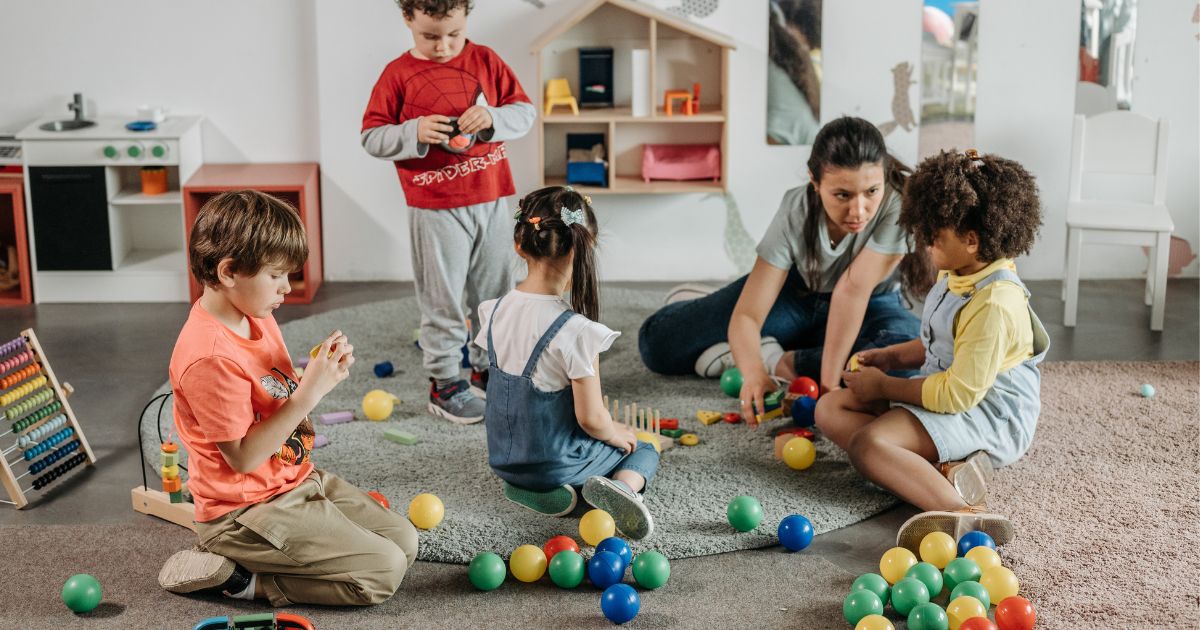
Preschool children are naturally curious. They want to touch, explore, listen, move, create, and discover how things work. This makes hands-on learning especially valuable during the early years. Sensory activities for preschoolers give children opportunities to explore different textures, sounds, colors, shapes, and movements while developing skills through meaningful play.
For parents choosing an early childhood education center, it is helpful to understand how sensory play can fit into a child’s daily learning experience. From simple water and texture activities to art, music, and hands-on exploration, sensory experiences can make learning more engaging. This article explores useful sensory activities, what children can learn from them, and how they can complement a well-rounded preschool learning program.
What Are Sensory Activities for Preschoolers?
Sensory activities are hands-on experiences that encourage children to explore their surroundings using one or more senses. These activities can involve touch, sight, hearing, movement, and other forms of exploration.
For example, a preschooler might explore different textures in a sensory tray, mix colors during an art activity, listen to different sounds, or experiment with water. The activity itself may look simple, but it can create opportunities for children to observe, communicate, make choices, and solve small problems.
The best activities are age-appropriate, supervised, and connected to a clear learning purpose.
5 Simple Sensory Activities for Preschoolers
1. Texture Exploration
Create a supervised collection of safe materials with different textures. Children can describe whether something feels smooth, rough, soft, or firm.
This activity encourages descriptive language and gives children an opportunity to compare objects. Teachers or parents can ask questions such as, “How does this feel?” or “Which one feels softer?”
2. Water Play
Water play can provide an easy way for children to explore pouring, filling, floating, and movement. With suitable containers and close adult supervision, children can experiment with what happens when water moves between different objects.
It can also introduce simple concepts such as full and empty, more and less, and cause and effect.
3. Color and Art Exploration
Painting and other art experiences allow preschoolers to explore colors, shapes, patterns, and textures. Children can mix colors, use different tools, or create pictures using a variety of materials.
The goal does not have to be a perfect finished product. The process of experimenting and expressing an idea is an important part of the activity.
4. Sound and Music Activities
Songs, rhythm instruments, clapping, and movement games can turn listening into an interactive experience. Children can practice following patterns, identifying sounds, and responding to changes in rhythm.
Music activities can also encourage communication and group participation.
5. Hands-On Discovery
Blocks, simple classroom materials, dramatic play, and other hands-on activities give children opportunities to manipulate objects and explore ideas.
Teachers can extend the activity by asking children to explain what they built, predict what might happen next, or work with another child to complete a task.
How Sensory Play Supports Preschool Learning
Sensory experiences can connect naturally with different areas of early learning. Instead of treating sensory play as something separate from education, teachers can use it as part of broader Pre-K learning activities.
A sensory activity can encourage:
- Language development: Children describe what they see, hear, and feel.
- Fine motor practice: Picking up, pouring, shaping, and manipulating materials require controlled hand movements.
- Problem-solving: Children experiment and discover what happens when they change something.
- Social skills: Group activities can encourage sharing, cooperation, and communication.
- Creativity: Open-ended materials give children opportunities to make choices and express ideas.
- Early academic concepts: Activities can introduce colors, shapes, patterns, quantities, and simple comparisons.
How Sensory Activities Fit Into a Pre-K Curriculum
A balanced Pre-K curriculum should provide children with different ways to learn. Preschoolers need opportunities for guided lessons, creative experiences, movement, social interaction, and independent exploration.
At Harvest Child & Youth Development Center, the preschool program includes hands-on experiences, art, block-area play, dramatic play, sensory exploration, indoor and outdoor free play, music and movement, and early literacy activities. The program also focuses on areas such as language, mathematics, science, problem-solving, communication, and social development.
This type of variety allows sensory experiences to become part of a broader learning routine rather than an isolated activity.
What Parents Should Look for in a Preschool Learning Program
When comparing preschool options, parents can look beyond worksheets and academic lessons. Consider whether the program provides children with opportunities to:
- Explore materials through hands-on activities.
- Participate in creative and sensory experiences.
- Practice communication and social interaction.
- Develop early literacy and mathematical skills.
- Learn through both teacher-guided and play-based activities.
- Work at an age-appropriate pace.
A strong preschool learning program should give children room to explore while providing appropriate guidance and structure.
Making Sensory Activities Safe and Meaningful
Sensory play should always be appropriate for the child’s age and supervised by a responsible adult. Materials should be selected carefully, especially for young children who may put objects in their mouths.
Parents and educators can also make activities more meaningful by connecting them to everyday learning. Instead of simply giving a child materials to explore, ask questions, encourage conversation, and let the child make choices.
The objective is not to make every activity complicated. Simple experiences can become valuable learning opportunities when children are encouraged to observe, communicate, and think.
Why Sensory Learning Matters in Early Childhood
Young children learn through active exploration. Giving them opportunities to touch, listen, observe, move, create, and experiment can make everyday learning more interactive.
For families looking for an early childhood education center, sensory exploration is one useful feature to consider alongside teacher guidance, age-appropriate activities, social development, early academics, and opportunities for play.
At Harvest Child & Youth Development Center in New Castle, Delaware, the preschool program is designed for children ages 3–5 and includes sensory exploration among its range of preschool activities.
Conclusion
Sensory activities for preschoolers can turn ordinary materials and everyday experiences into opportunities for discovery. Texture exploration, water play, art, music, and hands-on activities can encourage children to communicate, experiment, create, and develop important early skills.
When choosing a preschool, look for a program that combines sensory experiences with age-appropriate academics, social learning, creative play, and supportive guidance. Parents interested in learning more about the preschool program at Harvest Child & Youth Development Center can explore the program details or schedule a tour to see whether the learning environment is a good fit for their child.
Frequently Asked Questions
What are sensory activities for preschoolers?
Sensory activities are hands-on experiences that encourage preschoolers to explore materials, sounds, colors, textures, movement, and other sensory experiences while learning through play.
What are some easy sensory activities for preschoolers?
Simple options include supervised texture exploration, water play, painting, music and rhythm activities, block play, and hands-on discovery activities.
How do sensory activities support preschool learning?
They can provide opportunities to practice communication, fine motor skills, creativity, problem-solving, social interaction, and early concepts such as colors, shapes, patterns, and quantities.
Should sensory activities be included in a preschool program?
Sensory activities can be a useful part of a balanced preschool program because they provide children with hands-on opportunities to explore and learn alongside other academic, social, creative, and physical activities.
What should parents look for in a preschool learning program?
Parents can consider whether the program offers age-appropriate learning, hands-on activities, creative play, social interaction, early academic skills, teacher guidance, and opportunities for children to explore at their own pace.
Where can parents learn more about Harvest Child’s preschool program?
Harvest Child & Youth Development Center’s preschool program is designed for children ages 3–5 and includes sensory exploration, art, dramatic play, hands-on activities, music and movement, early literacy, and other learning experiences. Parents can visit the preschool program page or schedule a tour for more information.
